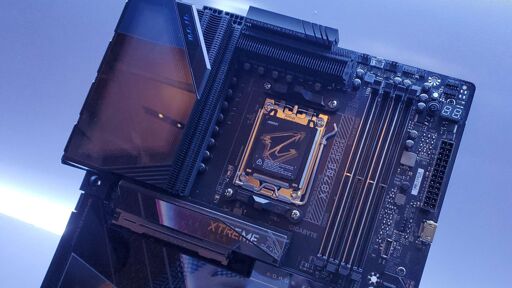
what if we cannibalize our long-term viability for a short-term gain says every dipshit in charge of tech hardware manufacturing.
you know when the bubble pops and they no longer have AI companies buying RAM they will switch back to consumers and keep the high prices.
if they’re still around when the financial shell game they’re playing finally comes to a stop. who am i kidding the government will bail them out.
Using your money.
if the US government were actually funded by taxes, then everything the government does would be with “my money”
Well, if you’re a citizen, the country is yours, and the government is there to manage it, but some assholes in power managed to convince people that it’s the other way around
Even if the government is funded by money printed by the central bank, it would still be funded with “your money”. Every dollar printed dilutes your money by that same amount, ie it’s like a much more subtle tax that doesn’t follow any of the principles of proportionality, everyone pays the same (except those with little to no liquidity and everything invested, so it’s really a tax on the poor through inflation)
Profits for me, losses for thee
That only works if we (the collective we) have more money. If a rich person has more $$ than a small country that means the effect we have is equivalent.
That’s why micron is doing what its doing. We are no longer the customer. They voted for us.
Of course, not all the companies survive and now there’s decreased competition, so we can shove prices up a little bit further
.
Absolutely
Keeping prices above what people are willing to buy for, while the majority of their business goes bust, is not a recipe to stay in business.
But consumers are stupid. when they start selling ram again at a high price we should all boycot buying computers. instead a lot of people will just accept the new price. we saw it after the pandemic, people just accepting prices instead of holding fast and forcing prices down.
You’re saying this as a comment on an article about how drastically sales have already dropped due to the price increases…
I am talking about when the price is no longer based supply. When we see their market bottom out on AI one would expect to see the price drop. But looking at recent history these massive companies keep the price high because consumers see it as the new normal.
Consumers will find a way to eventually afford this price bump when its not food, shelter or medical care. It just takes a little longer when it is not a necessity.
Every business is doing this for everything. To different degrees but they are all chasing their “get our fortune now and get the fuck out because the sky is falling” mentality. Have been since Trump 1.0 and now it’s accelerating rapidly.
You have to remember that “get that bag” is practically inherit to business. We spend a lot of time and effort making it illegal to fuck people over and do bad business stuff, but kinda-sorta since Regan the businesses have slowly been winning that battle.
That’s every company, most upper management don’t stay in one position for more than 2 years. So the system is setup for short term gains because investors aren’t interested in long term investments and the blowback is the next guys problem. Who then is looking for the next big win to cover up the last guy issues without fixing anything. Then they bring in someone to clean up the mess and the cycle starts again.
Plus most consumers have short memories or don’t have an alternative so their stuck. There are small groups holding on but for 75% of the world’s population right now it’s Android or iOS, AMD or Intel, AMD or NVIDIA, Samsung or WD or Seagate or SanDisk, Att or Verizon, Apple or Microsoft, and so on.
That’s every company
Not every company, just most. Privately owned corporations aren’t legally obligated to kill long-term viability for short-term gaing like publicly traded companies are.
Many owners of privately owned corps are that dumb, but not all of them
aren’t legally obligated to kill long-term viability for short-term gaing like publicly traded companies are.
Public companies are not obligated to do this. This is caused by the stock options that CEOs/other upper management gets. They want to maximize their gains on their could of years they serve before jumping ship to the next company.
False. There’s a thing called fiduciary duty where companies are obligated to make profitable decisions for their shareholders. If they don’t prioritize short term gains they’re opened up to lawsuits from investors
Fiduciary duty does not require they tank long term profitability for short term gains. That’s an idiotic belief you have.
Also your reputation. I had a Crucial SSD and was days from getting an identical one as a backup but then they said they were stopping consumer RAM sales so they’re now on my blacklist.
Question is, though, who now isn’t on your blacklist?
Samsung and SK Hynix never sold to consumers directly, yet seem to be avoiding flak. Micron is now joining them in that.
Who do you get that isn’t that three? Almost all RAM on the market is Samsung, SK Hynix, or Micron.
On top of that, Samsung and SK Hynix were the ones that signed the OpenAI deal (OpenAI bought 40% of the world’s DRAM supply and kicked off panic buying), so tbh Micron is the least responsible for the current DRAM market issues.
how are they in control? market demand is an outside force
Makes sense. CPU/Mobo/RAM typically go together in a rebuild. Storage, case, PSU, perepherals, GPU can often carry over between builds as they’re all pretty backwards compatible.
Yeah. This makes pretty good sense. Make some ram and SSDs - lowee the price - and I’m sure Motherboard sales will go up.
It’s funny how people don’t want to buy motherboards without anything else
I only change motherboards when moving up to the next RAM format or CPU chipset. I stick with AMD due to cost and low thermals, and while their CPU generations shared the same interface I had one mobo for DDR3, one for DDR4, etc.
Can’t wrap my head around constantly upgrading the mobo to be honest. Sure, they have lots of features but I haven’t seen a situation where a mobo would be an upgrade worth doing without also upgrading everything else.
Just use Intel CPUs and you’ll understand, as they seem to invent a new incompatible socket every five minutes requiring a new mobo.
That is part of why I have avoided them, far easier to mix and match AMD stuff to meet my price points since their sockets stick around so long!
Each PC lasts me at least 5 years. I am three or so years on my 5800x3d with a 7090XT I picked up last year and the whole setup will probably still be rocking games past 2030.
Hah I just upgraded to that setup at the beginning of the year from a 2017 ryzen 1700 and GTX 1080 build.
It increased the longevity of this system by so much
The only time I’ve ever done that is during an upgrade chain that results in a motherboard not fitting into the case I need it to. Even then, the last one I bought was from a local used parts shop since I had an Intel 4670k I wanted to slap into a server.
I still got a 4670k in my server. Thought of upgrading in Q1. I can forget all about that now… Unfortunately my mobo is slowly dying, so there’s a limit on how long I can push it.
How often do you upgrade your computer? I do the same but without really trying, it’s literally the case that by the time I start to feel I need a new pc there is already a new CPU socket, often several, and new ram format. I’ve almost never been able to actually reuse stuff. I imagine the only scenario where I could do that would be if some component straight up broke
Maybe every 5 or so years, and generally there has been something worth upgrading the mobo for like new connections for storage. So far it has been when it struggled with 75+ FPS in games that I care about at the settings I want.
Since it is so spread out I can’t say it is a solid pattern, but so far each CPU and mobo upgrade have been together with a new set of RAM and occasionally I get extra RAM in between. Hard drives/SSDs and GPUs are whenever but generally they are years apart too.
Yeah but it’s like the gearbox. While everything’s pulled apart, you may as well swap out the clutch, bearing, and flywheel too because they’ll need replacing again first. Especially if better versions of them are now supported.
because youd only swap mobos for either aesthetics(expensive, not often done) at best because you choose to downsize, or because you need more pci-e I/O.
the average user doesn’t use all their pci-e i/o, and the ones that do, are looking towards workstation motherboards, which is almost a completely different market from the consumer level stuff. It’s a game of, you know when you need more i/o, and if you needed it, you probably would have never bought the consumer level board in the first place.
I don’t understand what their long-term plan is here. Even if AI isn’t a bubble eventually all of the AI companies are going to get to a point where they don’t need more compute because they’re working on algorithmic optimisations because they decide that that’s cheaper.
Then they’re going to have to pivot back to the consumer market. Except by that point it won’t even be a consumer market because China will have eaten their lunch.
The plan is to continue making bank until the companies are done with them, then sell to consumers again without missing a beat.
Source: the GPU shortage we just went through.
Future source: the CPU shortage scheduled for 2026.
That’s my point though they can’t do that.
The market isn’t just going to wait around for them to get around to selling to consumers again. China is going to see an opening and they’re going to manufacture their own chips and make bank. Then when the traditional manufacturer is getting their head out of their arses then realise there market share has vanished. All 100% their fault.
They have decided to shoot themselves in the foot because someone’s convinced them they won’t ever need legs ever again.
Eh, Chinese manufacturers are also desperately trying to catch up with AI hype. In any case, we’ll see some new brands on the market, and it’s not a bad thing, and I would not spend my time worrying about giant rich corporations.
My actual worry is that once RAM prices go up, they won’t go down for quite some time. If we get another bubble after AI bubble pops, the prices may not decrease at all.deleted by creator
I read a great article recently that tries to analyze what exactly went down and for what reasons. And most importantly, the effects it’s going to have on different hardware prices: https://www.mooreslawisdead.com/post/sam-altman-s-dirty-dram-deal
Yeah that’s widely considered to be the article about it tbh
These companies are controlled almost entirely by people who only really care about what the stock price will be sometime in the next few years or so.
*quarters, or even months
I don’t understand what their long-term plan is here.
They most likely don’t have one. Keep in mind that tech bros and C-suite execs are sociopathic dumbasses. We saw this with AAA gaming studios and private equity where they just assume line will continually go up
Cloud computing. Stallman was right.
We would need a better general network for that. Remember stadia? Nothing has changed since then, hell some areas have even lost some capacity.
I’d you’re talking about cloud computing for gaming specifically (as you can of course use cloud computing for, well, everything), then maybe it’s not good enough in the US, I don’t know enough about that area to say, but networking is definitively more than sufficient in Europe.
Not american, But most of the world does not have the network. And Europe might have a good enough network, but not everywhere, and who knows if the current network will handle the sort of extra load that moving everything off local hardware would create.
Noooooo don’t say that ;a;

deleted by creator
How dare you suggest that there is a future beyond next quarter!
Speculative
The companies making the ram chips are not the ones making motherboards. They just want to sell their product for as much as they can.
Shutting down your entire consumer business does seem a bit short sighted though - keep the doors open for the future.
On the plus side, indie games that don’t require a rocket ship for a PC have never been better. So, can still play some good stuff on my old clunker. Thanks to Steam/Proton, they run even better on my old computer.
Would be nice to see the gaming industry pivot back to making innovative games within the constraints of hardware, instead of just expecting customers to throw ever more powerful (and power consuming) hardware at it.
As much (well deserved) hate that Nintendo gets, they are fantastic at this. They seem to be able to make games look good on low powered systems with stylistic decisions and smart optimization/coding. They learned some pretty important things in the NES/SNES era about using tricks to squeeze performance out of the few KB/MB they had to work with.
Yeah that crossed my mind, but if I’m not mistaken Pokemon was developed by Game Freak, only licensed by Nintendo.
DLSS has made devs lazy. Why bother optimizing when you can have some whiz bang AI algorithm turn a low res input into a greasy looking high res output.
Some Indy games using unreal engine can still bog down a fast PC…
Somebody pop the zit that is AI.
AI isnt a zit, its a giant infected boil and blister now.
I don’t disagree lance that green puss filled cavity.
A giant cyst that got infected and is now life threatening.
It’s such a shame to see high-performance computing and gaming more broadly become largely unaffordable. Hell, prior to the DRAM shortage, the current-generation game consoles were already MORE EXPENSIVE than they were at launch. And it’s just going to get worse.
Like it was before. In the, not so long ago, past a high end pc was too expensive for the average user.
This statement sounds defeatist.
None of this is “high performance computing”. Are you simulating nuclear explosions? Airflow around supersonic aircraft? Sequencing DNA?
This is all entertainment, it’s useless, it turns people into potatoes. Digital garbage to make AI fat people fart videos.
Good riddance I say.
You posting on the Internet is also useless digital garbage, so put your money where your mouth is and go do something productive.
“Dear Mr. President, there are too many states nowadays, please eliminate three. I am not a crackpot.”

Lil bro thinks this is only about gaming
Probably never used his pc for anything other than
Go use a type writer.
I simulated a nuclear accident in a i5 2540M
I just did on an esp32
On my steam deck. It was devastating 🤣

At least people aren’t buying at these high prices, wouldn’t want them to stay there after all.
This is a good point, we don’t need PCs to be this expensive.
I just hope we don’t fuck up the whole thing and end up with cloud computers or end up not making new PCs…
I’m pretty convinced this is the play. Drive up DIY PC parts then promote thin cloud clients as a way to have a PC without paying the crazy prices that they set. It’s a lot easier to tell you “it’s safer for the children” and pillage every file, action, and keystroke for AI training and data brokerage. Your owned PC is a black box for them and it’s their wet dream to own it for you… As a subscription of course.
While it might actually end up going that way, I don’t think that’s a deliberate play. The tech bros and C-suite execs tend to be sociopathic dumbasses. I think they’re legitimately just loading themselves up with tons of debt just to buy hardware to capture market share thinking that things could never collapsed on them.
thin client machines that you have to lease with a cloud subscription and which are locked down to the intended purpose only. basically the death of generic computing. delevoper machines will be tied down devel kits.
Isn’t that what windows is anyway?
not yet. you can develop on windows without paying microsoft. windows is not subscription software.
The way things are going, pretty sure it’s as you say, not yet. The current technology environment is frustrating, to say the least.
Like a Chromebook.
5 years ago I would’ve called you insane, but with everything happening right now… it’s a distinct possibility.
RAM’s unaffordable, GPU’s will likely be harder to come by and more expensive. Microsoft is actively driving people away from Windows, Steam is launching their Steam Machine…
Here’s hoping many gamers will jump to Linux and grow that platform instead. But even then, too expensive hardware will be an issue.
We’re living in interesting times.
That in itself might act to make linux attractive as it can be a much lighter weight alternative to windows to stretch the useful life of hardware they own.
That’s actually the main reason I switched my PC from Windows 10 to Linux. I couldn’t upgrade to Win 11. Now I’m happy I couldn’t!
I would have called myself insane five years ago too!
Yeah, jumping to Linux could help a bit. I did that a couple of years ago, but that was more because I couldn’t upgrade to Win 11 on my almost a decade old PC. Now I’m glad I couldn’t upgrade to Win 11 haha.
I had a laptop with Win 11 tho but I never got used to it and don’t want AI and shit in any of my computers so I jumped over to Linux on that to.
Maybe Steam will save the day with the Steam Cube? Isn’t that pretty much a normal gaming PC?
That is an increasingly high risk I can see, PCs just no longer exist.
deleted by creator
Just keep old computers is all. Eventually your spec will be considered ‘retro computing’ and you can still enjoy the thousands of games that are playable on real hardware.
Computer with cloud-based subscription sounds like a great example of enshittification.
I might prefer no PC over that. Ew. I mean, the libraries have PCs you can borrow if I’d really need to use one.
I went from thinking about a full rig upgrade, to just buying the best used processor and GPU my am4 board could handle with my current PSU and ddr4 ram.
Went from a ryzen 1600x and a Nvidia 1060 to a ryzen 5 5600x and a Radeon rx 6600 xt. I’ll be able to ride that out for a few years no problem.
I went from thinking of upgrades to enjoying my backlog of old games. My wallet and library are both happy and I’m enjoying the games I’m playing.
same. I have over 300 games in my steam library that i’ve bought over the years and the vast majority of which I never launched. So now i’m going through them. combine that with finally getting retroarch/libretro all PROPERLY set up I’ve also got a shit ton of roms from various consoles to play also, games I couldn’t afford as a kid.
Like right now I’m FINALLY playing Ocarina of Time for the first time ever and it’s a blast, now I understand why people love it so much. Also started playing New Vegas and System Shock on the PC which I’ve owned for years and never played and both those are great too. New Vegas is REALLY fun.
and then there’s GOG which has thousands of older games, drm free.
Likewise. I haven’t bought a game that wasn’t at least a year old in a decade. Heck, right now I’m playing Psychonauts.
Same here, the Steam Deck changed my life 😆. Less AAA, more AA and indie games, especially at work.
The artificial price hikes actually saved you money. Noice!
AM4 unite! Have had 3600X and 2070 super since 2019 and still works well. Although some USB-ports on the mobo are starting to degrade.
That’s alright. USB rails for a PCI slot are dirt cheap.
funny i bought exactly the same CPU and GPU half a year ago. Someone in my city sold these for 200€.
I was going to go for an AM5 board and everything, but couldn’t afford it. My older parts were from 2016 and not even terrible. Its funny how little the hardware requirements have changed in the games and OS area. I am still using the same 16g RAM and PSU from 2016.
Ryzen 5600x here, was rocking a 6700 XT but found a good deal on a RX 9070 for $540 right around when the RAM prices increased. Already have 32 GB RAM, so I’m set for a while.
Yeah, I had the ram, but the 6600xt was the most I could buy without having to also upgrade my PSU.
Nnnoooo, you won’t get enough fps to enjoy your games!!!
/s in case some of you don’t get it
My eyes aren’t good enough for 4k. Lol
I also decided to do a mild upgrade in my AM4 board rather than shell out for marginal upgrades. I’m rocking the 5700x3d 5700xt build.
Nice, had a nitro 6650xt, can’t recommend enough if it makes sense financially
Paid under $200 for it and it punches well above the 1060 I’ve been using. Wanted a Radeon because they play nicer with Linux and this card is the beefiest AMD I could go without having to also buy a new PSU. Also couldn’t go much nicer anyhow or I’d be creeping up on games cpu limited, so it pairs nicely with the r 5 5600x. So for me and my particular set up it made for a nicely balanced hardware and cost choice. After this it will just be time for all new hardware in a few more years.
Burst the fucking bubble already. I’m edging so hard right now.
It’s a play to make at home compute unachievable, forcing people to pay for subscription cloud services and cloud compute in walled gardens.
I don’t agree. The prices will rise across the board no matter where you site the memory or if it’s in a gaming computer or otherwise. Renting will always be more expensive than owning because competitors must recoup the capital cost of buying and make margin at the same time.
Next up: MSI, ASUS, … are pulling out of the consumer market due to falling revenue causing major price hikes.
Here’s to hoping that it increases pressure to break the cartels and start getting the ball rolling on more independent foundries.
Problem I see with new foundries is that the profit is still going to be selling to data centers. It would take a philanthrope like Marc Cuban selling meds at cost, selling at a loss to enthusiasts.
Calling Marc Cuban a philanthrope feels icky, but he is doing a thing that I think is genuine.
It doesn’t matter as long a the supply continues to grow. It also helps make the rest of the world less dependent on a US hegemony that’s now going sour. When investment firms are buying up so much inventory for data centers that aren’t even operational, a big part of that exists as an excuse for market manipulation by the really big hitters that have their presence in those cartels anyway. Once they start feeding their own demise and market competition, they will back off pretty quickly and will likely saturate the market from the surplus inventory they are clearly hoarding under bullshit excuses to try to eliminate and buy up the nascent competition.
Do MSI and ASUS have enough corporate/enterprise sales to offset the loss of consumer demand? With the RAM companies the consumer crunch is caused by AI companies bidding up the price of raw memory silicon well beyond what makes financial sense to package and solder onto DIMMs (or even directly solder the packages onto boards for ultra thin laptops).
Asus is a significant ODM, supplying boards for brands like HP. I’m not sure what lines/models they make today, but they are a lot bigger than just their consumer lines.
Or gpu prices or hdd/ssd prices that never recovered from the tsunami. Consumers just keep getting fucked.
A rising tide drowns those who can’t swim.
Prices don’t generally recover; any reason for a price rise is a reason to make it the new norm.
Used to be, competition would spring up and keep them in check, but now that the entire market is 6 companies in a trench coat, any new competitor would just be acquired or forced out of business with legal demands or supplier tampering.
These companies have been found guilty of collusion in other markets (lcd panels anyone?) so what you are saying while factually correct, is in fact because of the failure to address the post collusion market. A fine is paid and then business as usual. It’s like a chicken vs egg argument except instead of just recognizing it doesn’t matter and regulate a market properly we use it as perfect justification for doing nothing.
This is hilarious. Intel after many years finally fixed their manufacturing process, but won’t be able to sell chips because of memory crunch
If only they had a solid state technology that expanded system memory… Shutting down optane comes to bite them, again.
I fear they will pull a GPU and the storage prices will be permanently 50% higher after.
I mean, that’s capitalism, right? The manufacturers see that their product is still selling at a 300% markup, why would they bring the price back down when they can just make more profit if/when costs for them come back down? Sure they might drop it a little to make it “look” like a good deal. Just like GPUs. They went from being $600 for high end, to being $2000. Then when they announced that the next Gen was “only” going to be $1200 everybody was like “Wow! What a great deal!”
I hate this timeline. They just keep figuring out new ways to squeeze money out of me and ruining my hobbies.
But this only works long-term with collusion. Which i don’t see the current administration persecute much.
This does seem likely, especially if it’s as the article claims and this continues into 2028. After 2 and a 1/2 years of triple digit profits nobody is going to be satisfied with a measly 14% or whatever markup they were getting before.
Our economy increasingly is consumed to serve the rich. They are eating the world. Grocery stores increasingly cater to the wealthy. So do the automakers. Billionaires are buying up whole city blocks for themselves. And now we won’t be able to buy electronics because they’ve taken the resources for their speculative investments, and if they crash the economy our tax dollars will be appropriated to bail them out. It’s almost like we’re barreling towards a violent confrontation between the classes…
I for one am in favor of throwing the rich into wood chippers.
The rich and their bought and paid for politicians.
Feet first.
We won’t. Them sowing discontent among ourselves works to well and has worked longer then most realize.
I’m on ryzen 9 5900x, rtx 3080, 32 GB DDR4, with mobo and psu that’s ~€850 today and it will play most modern games on high settings 1080p at +100 fps. Computer hardware these days is a lot more like car hardware than it used to be. Generational improvements aren’t as big and the price for a used 5 year old unit is a ⅓ of a new one. Unless you absolutely need the latest and greatest go with a used last gen.
Same specs as you except 5800x3D. Same sentiments at 1440p.
Same here, except 64GB of RAM, I can’t even remember how much that cost 4 years ago but I’m afraid to check the receipt at this point.
https://pcpartpicker.com/list/XpFtXR
That setup would currently run for around $1730? Without investing into a monitor, or any peripherals like keyboard, mouse, etc and picking a relatively cheap psu/case/cooler combo.
Maybe I misunderstood but seems a far cry from €850.
Your prices are msrp for unused components.
On my local equivalent of ebay/amazon I can get a used 3080 10 GB for $390, ryzen 9 5900x $265, 32 GB DDR4 3200 mHz $170, new b550 mobo $80, 750w psu 80+ gold $70. $975 total. I didn’t count anything else coz a lot of people already have those things from their old PCs and they’re super cheep. For a full ~$1000 build add a $60 512 GB sata ssd. Cooler will set you back $15, same as a 1080p screen, case and m+k combo and a lot of the time you can get those things for free and they will last you a lifetime.
This is my first ever keyboard that I got for free from an office that was closing down and I use it to this day. Eventually I had to buy a PS/2 to USB dongle but that’s like $5. I have a 2nd spare one in case the 1st one breaks. I plan on using it till I die.

I see the misunderstanding, didn’t consciously see the ‘used’ hardware in your post above. That makes a lot more sense!