Walmart spent billions replacing warehouse workers with robots, only to discover the robots can’t lift dog food and the engineers cost more than the workers did. Apparently the automation revolution has reached its greatest technical challenge yet: doing the job it was supposed to automate. Somewhere, a PowerPoint deck is quietly being deleted.
The system designers get tripped up by the strangest things. I once worked in a factory that uses copper bars of varying lengths, and the designer didn’t expect the bars to ‘sag’ when picked up flatwise from the middle. So I can imagine picking up a bag of dog food would do that.
That’s a bad engineer problem. Tasks must be reduced to absolute minimums, and operating scenarios must be maximized. Otherwise failure conditions will win.
They might have underestimated the mix of items. From bagged dog food with 20kg, boxes of all shapes down to small poly‘s is hard to handle. For picking robots as well as the sorting AGV‘s.
Amazon didn’t robotize its entire item spectrum yet, as far as I know. It focus on robotizable items.
If such a heavy dog food bag brakes, all the small pieces lie on the floor that those dumb AGV‘s drive upon. That’s immediately causing clogged wheels and even more. And to clean the mess up, one has to stop the entire AGV area as it’s not safe for humans to enter. One broken dog food bag can cause some expensive maintenance and drives operational costs up. 1 broken bag per month can likely kill your business case.
Nah it’s at least another decade of sunk cost management style then they will pivot back to humans once minimum wage has been repealed and the labor camps are in place
It’s one of the great ironies of our time that we spend billions on slop machines but haven’t yet been able to build a robot that can empty the dishwasher.
Robots can work well in warehouses. Amazon’s have been a success, for example. This just sounds like whomever WalMart hired to design this didn’t know what they were doing and Walmart got screwed. Maybe they tried to automate the wrong tasks, or leaned too heavily on the sales pitch of “AI magic” rather than understanding what they were buying.
The article also mentions Kroger’s failed dive into automation. From what I can find online, the automation worked, but it was a flop because it was expensive and underutilized — it wasn’t worth the money spent because it was focused on filling online orders that dried up.
I work at a Kroger owned store. For whatever reason they decided to give that another try at my store and another one in the same division. We’re all very sceptical… since you know it already failed before but it’s better than the robot “Tally” which drives around and checks for empty spots on shelves. The poor grocery guys are supposed to then go around and face em despite already being tight on people
The same items at my local Ralphs (Kroger) are constantly (like 4+ years) out of stock because they just face over the holes. Whoever is putting inventory into the computer must absolutely suck too because this shouldn’t even be happening; but having worked at Walmart I’ve seen firsthand how people roll their eyes when the numbers are off.
I’ve been told that it’s mostly automated. IE the Point Of Sale tells the system what items were sold and it subtracts from whatever total it has. The produce guys have said that because of this system some things like bananas are almost always screwed up, cause the barcode and the PLU (the numbers) aren’t actually the same item. Namely sometimes when the banana suppler changes they don’t get automatically ordered cause the system thinks we’re selling the old ones which “don’t exist anymore”. I’d expect similar things happen to grocery and home but to a much less extent, probably from people just tossing stuff out instead of scanning it out and then still just tossing it. Yay food waste.
Ocado! I remember watching a promotional video about this being the future of grocery stores like a decade ago, and always vaguely wondered what happened to it. The whole hive-picker robot-carts-on-rails thing seemed very well developed, but I wasn’t convinced it was really practical.
You can bet your tushy that whichever middle-manager came up with the idea of spending all that money to reduce reliance on human workers, has already picked up a hefty bonus, used a golden parachute, and is now scamming their way through another giant corporate to repeat the same shit with a different idiotic idea.
Nah, the top (C-suite) rarely has original ideas. Their job isn’t to innovate or improve but to maintain the status quo. And they wouldn’t risk their position with an idea that can backfire so easily.
No, that’s reserved to the middle managers who have something to strive for - more money, more influence etc.
Since when is automating jobs an original idea? Middle managers absolutely don’t make decisions this big. Some bigwig heard about it from one of his buddies and announced a “transformation” a couple days later.


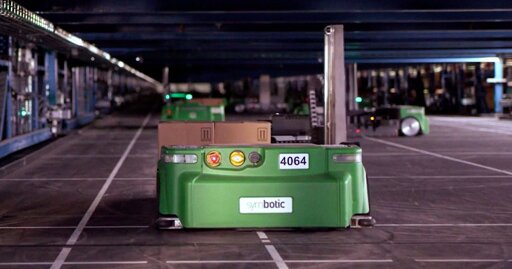
Walmart spent billions replacing warehouse workers with robots, only to discover the robots can’t lift dog food and the engineers cost more than the workers did. Apparently the automation revolution has reached its greatest technical challenge yet: doing the job it was supposed to automate. Somewhere, a PowerPoint deck is quietly being deleted.
The system designers get tripped up by the strangest things. I once worked in a factory that uses copper bars of varying lengths, and the designer didn’t expect the bars to ‘sag’ when picked up flatwise from the middle. So I can imagine picking up a bag of dog food would do that.
I mean anyone who’s ever done anything with a long piece of lumber or piping or anything could predict that.
That’s a bad engineer problem. Tasks must be reduced to absolute minimums, and operating scenarios must be maximized. Otherwise failure conditions will win.
They might have underestimated the mix of items. From bagged dog food with 20kg, boxes of all shapes down to small poly‘s is hard to handle. For picking robots as well as the sorting AGV‘s.
Amazon didn’t robotize its entire item spectrum yet, as far as I know. It focus on robotizable items.
If such a heavy dog food bag brakes, all the small pieces lie on the floor that those dumb AGV‘s drive upon. That’s immediately causing clogged wheels and even more. And to clean the mess up, one has to stop the entire AGV area as it’s not safe for humans to enter. One broken dog food bag can cause some expensive maintenance and drives operational costs up. 1 broken bag per month can likely kill your business case.
They just need robots that will clean up the dog food.
Simple thoughts for a complex problem never lead to a solution.
You might think one or two steps further. The 5-W framework might guide your thinking.
And here I thought the /s was loud enough.
So instead of hiring actual people again, they’ll look for cheaper engineers and robots.
Nah it’s at least another decade of sunk cost management style then they will pivot back to humans once minimum wage has been repealed and the labor camps are in place
It’s one of the great ironies of our time that we spend billions on slop machines but haven’t yet been able to build a robot that can empty the dishwasher.
As a bachelor, a dishwasher is already a cabinet. It doesn’t need emptying.
I’ve considered buying a second dishwasher so I can just swap between two self-cleaning cabinets.
Robots can work well in warehouses. Amazon’s have been a success, for example. This just sounds like whomever WalMart hired to design this didn’t know what they were doing and Walmart got screwed. Maybe they tried to automate the wrong tasks, or leaned too heavily on the sales pitch of “AI magic” rather than understanding what they were buying.
The article also mentions Kroger’s failed dive into automation. From what I can find online, the automation worked, but it was a flop because it was expensive and underutilized — it wasn’t worth the money spent because it was focused on filling online orders that dried up.
https://www.wsj.com/tech/amazon-warehouse-robots-automation-942b814
https://retailboss.substack.com/p/krogers-350-million-lesson-why-big
https://macrohint.com/krogers-2-6-billion-warehouse-meltdown-the-untold-story-behind-the-biggest-automation-failure-in-modern-grocery/
I work at a Kroger owned store. For whatever reason they decided to give that another try at my store and another one in the same division. We’re all very sceptical… since you know it already failed before but it’s better than the robot “Tally” which drives around and checks for empty spots on shelves. The poor grocery guys are supposed to then go around and face em despite already being tight on people
The same items at my local Ralphs (Kroger) are constantly (like 4+ years) out of stock because they just face over the holes. Whoever is putting inventory into the computer must absolutely suck too because this shouldn’t even be happening; but having worked at Walmart I’ve seen firsthand how people roll their eyes when the numbers are off.
I’ve been told that it’s mostly automated. IE the Point Of Sale tells the system what items were sold and it subtracts from whatever total it has. The produce guys have said that because of this system some things like bananas are almost always screwed up, cause the barcode and the PLU (the numbers) aren’t actually the same item. Namely sometimes when the banana suppler changes they don’t get automatically ordered cause the system thinks we’re selling the old ones which “don’t exist anymore”. I’d expect similar things happen to grocery and home but to a much less extent, probably from people just tossing stuff out instead of scanning it out and then still just tossing it. Yay food waste.
Ocado! I remember watching a promotional video about this being the future of grocery stores like a decade ago, and always vaguely wondered what happened to it. The whole hive-picker robot-carts-on-rails thing seemed very well developed, but I wasn’t convinced it was really practical.
Thanks for closing that loop for me.
You can bet your tushy that whichever middle-manager came up with the idea of spending all that money to reduce reliance on human workers, has already picked up a hefty bonus, used a golden parachute, and is now scamming their way through another giant corporate to repeat the same shit with a different idiotic idea.
Middle manager? I’m betting this idea comes straight from the top.
Nah, the top (C-suite) rarely has original ideas. Their job isn’t to innovate or improve but to maintain the status quo. And they wouldn’t risk their position with an idea that can backfire so easily.
No, that’s reserved to the middle managers who have something to strive for - more money, more influence etc.
Since when is automating jobs an original idea? Middle managers absolutely don’t make decisions this big. Some bigwig heard about it from one of his buddies and announced a “transformation” a couple days later.