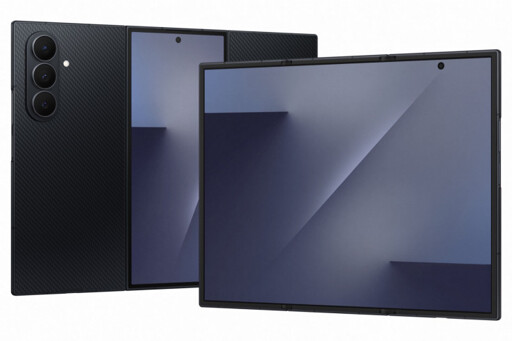
Samsung has announced the Galaxy Z TriFold, a foldable phone comprised of three ultra-thin (~4mm) panels and two sets of hinges, that unfolds into a 10-inch tablet. When closed, it resembles a standard smartphone with a 6.5-inch display that is 12.9mm thick. Because the main screen is so large, Samsung has created a "standalone" version of Samsung DeX, meaning it can switch to a PC-like desktop mode without attaching ...
This is a very cool piece of technology. The comments here naysaying about it seem odd to me. If it’s not for you that’s fine, but many millions of foldables have been bought over the past few years, and they continue to sell very well today
Which foldable do you own? There is no visible crease on my Fold 7 during normal use. The only way I can see it is by placing the phone directly under a light and angling it in an unnatural direction.
That said, my old Fold 4 had an obvious crease. But it’s no longer an issue with modern foldables.
it is a very cool technical achievement, but the user experience leaves a lot to be desired with them. most people don’t think about comparing. which is the only way i can imagine samsung getting as big as they have.
well that is part of the user experience. the main thing that annoys me though is that the ui tends to go one of two ways for these devices; either it’s super-custom to the point that all application developers have to do extra work to be usable on it, or there’s too little customisation, which again means apps are not properly usable without extra work. i’ve not seen a folding device that “just works” yet.
A lot of the issue with foldable is the non-standard aspect ratio. This gets to a standard tablet aspect ratio, so should run out of the box with most apps without additional modification.
Also DEX support on-device means it can run fully windowed applications and use mouse and keyboard natively, which is a big boost in functionality for productivity applications.
personally my experience with anything samsung is that it’s locked down to hell so i don’t know how useful dex actually is. the idea is neat though, wish someone else did it.
DEX is actually pretty good when used with a keyboard and external monitor. I also dont love thr Samsung walled garden, but I end up buying their products because I use my phones for several years at a time before replacing them so top end hardware specs are a priority and especially cameras.
I would go Sony but the data band support in the US is incomplete, and I can’t get caught out by poor cell service while traveling.
I am considering going Pixel next but Graphene hasn’t been announced for Pixel 10 yet so I’m a bit on the fence, I guess I could buy an older model and give it a try wifi only for a bit to see how I like it.
i’ve flipped between sony and lg for my past three phones (which is a period of 14 years at this point), and been forced to use samsung stuff for work. the main difference i’ve found is that not only is samsung hard to switch from due to their walled garden stuff, they’re hard to switch to.


This is a very cool piece of technology. The comments here naysaying about it seem odd to me. If it’s not for you that’s fine, but many millions of foldables have been bought over the past few years, and they continue to sell very well today
And they will continue to have big ass creases visible in the folding part
Only in real life, not in any of the marketing materials. So you only know how it really works after purchase.
Almost no one buys a super expensive phone that has a totally new form factor without trying it out in real life before buying it
Which foldable do you own? There is no visible crease on my Fold 7 during normal use. The only way I can see it is by placing the phone directly under a light and angling it in an unnatural direction.
That said, my old Fold 4 had an obvious crease. But it’s no longer an issue with modern foldables.
it is a very cool technical achievement, but the user experience leaves a lot to be desired with them. most people don’t think about comparing. which is the only way i can imagine samsung getting as big as they have.
Statement with no substance. What do you desire that’s not there?
Aside from the screen being softer and easier to scratch, name a practical difference between this and another 10" Android tablet…
If a 10" tablet meets your desires, and your desire to fold it and put it in your pocket, what’s left?
well that is part of the user experience. the main thing that annoys me though is that the ui tends to go one of two ways for these devices; either it’s super-custom to the point that all application developers have to do extra work to be usable on it, or there’s too little customisation, which again means apps are not properly usable without extra work. i’ve not seen a folding device that “just works” yet.
A lot of the issue with foldable is the non-standard aspect ratio. This gets to a standard tablet aspect ratio, so should run out of the box with most apps without additional modification.
Also DEX support on-device means it can run fully windowed applications and use mouse and keyboard natively, which is a big boost in functionality for productivity applications.
personally my experience with anything samsung is that it’s locked down to hell so i don’t know how useful dex actually is. the idea is neat though, wish someone else did it.
DEX is actually pretty good when used with a keyboard and external monitor. I also dont love thr Samsung walled garden, but I end up buying their products because I use my phones for several years at a time before replacing them so top end hardware specs are a priority and especially cameras.
I would go Sony but the data band support in the US is incomplete, and I can’t get caught out by poor cell service while traveling.
I am considering going Pixel next but Graphene hasn’t been announced for Pixel 10 yet so I’m a bit on the fence, I guess I could buy an older model and give it a try wifi only for a bit to see how I like it.
i’ve flipped between sony and lg for my past three phones (which is a period of 14 years at this point), and been forced to use samsung stuff for work. the main difference i’ve found is that not only is samsung hard to switch from due to their walled garden stuff, they’re hard to switch to.