

2·
1 day agoGood moment to join a union by yourself (and/or a socialist org like the PSL) and ask or directly organize yourself together with such orgs!
Good moment to join a union by yourself (and/or a socialist org like the PSL) and ask or directly organize yourself together with such orgs!

That’s when it was under Chinese ownership, remember they had to sell the US Tiktok to a Yankee company
“Fast” train, going 150km/h half the trip duration lmfao
Is there no union or organization locally that you can ask? Protest isn’t an individual action, it’s a social organized action, so you ideally should get involved with local orgs or your work’s union for this
Don’t you have a student’s union or representative? Get informed locally on your rights and possibilities.
I’m also in the EU, and I’d much rather get some posts calling for grassroots political action than the constant “elon said something Nazi again”.
Organizations like the PSL do have lists of demands and are actively building a movement around this to gain momentum. You should check them out :)
How does this affect anything?
It’s a momentum thing. one general strike won’t change the world, it’s the start of a much larger movement to get people to organize in socialist organizations like the PSL (remember socialism has always been fascism’s greatest enemy) and in unions. A one-day general strike is not a “perfect is the enemy of good” logic, it’s simply materially impossible to get everyone to rally in one week, or one month, or likely one year. It’s just a start and a show of strength.
There are such thing as medical personnel strikes. Typically, public sectors organize so-called “minimum services”, so they leave a minimum of people to stay in the hospitals / trains / buses for obvious reasons, and the rest go out to protest. A day with fewer nurses and doctors may be bad, but fascism is lethal too.
I commend your appreciation of the field as a science, but you should also acknowledge that 80% of what’s currently taught in the academia about economics is just wrong. Supply and demand (unfalsifiable and shitty predictive capabilities compared to the falsifiable and empirically proven labour theory of value) is just one example in the long list of econ-101 bullshit.
Regardless, as an appreciator of economics, have you checked out econophysics? The study of economics as a thermodynamical system. It’s wonderful, with predictive capabilities on for example salary distributions in capitalist economies, Paul Cockshott has a book and a few introductory videos on his YouTube channel
Economics as a field in theory is great. The problem is that it’s been hijacked by capitalism, and 90% of the stuff taught in faculties is antiscientific. The founding grounds of neoliberal economics lay in the Austrian school, which prides itself in being non-falsifiable by evidence. Anything stemming from there is a pile of dogshit. Marxian economics and Modern Monetary Theory, on the other hand, have wonderful predictive capabilities and are proper science
He was the economist
I meant medical physicians, not particularly researchers. My point is we could apply the healthcare model, i.e. a body of highly trained professionals working on exchange for a wage without the need for constant evaluation of metrics, relying on social value of medicine instead of grants as motivation.

I’m not in the US, but I’m already militant in such organizations in my home country.
Medicine is already this better way (in countries with social healthcare systems). A body of highly trained specialists who constantly update their knowledge through research, conferences and reading the last scientific advancements, and don’t necessarily earn extremely high salaries but have a comfortable life and a stable employment. We could expand this model to all sciences.
Ineffective: “please leave”
Also ineffective: “I call for X”
Effective: “I will be funding and giving media access to local self-defense groups, worker organizing, and mutual aid orgs. The threat comes from the state apparatus and the only way it can be defeated is by grassroots organizing”

Great job ignoring the healthy populational growth during socialism in Romania followed by demographic catastrophe since 1990. Let’s see what happened to Romanian GDP per capita during socialism and after (Source):
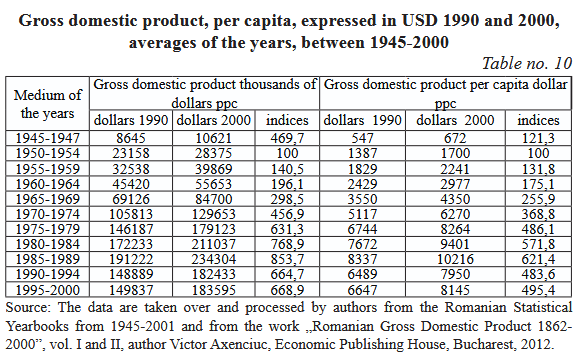
Oh, it turns out that GDP per capita grew sixfold (600%) during communism, and in the ten years following, it fell by 15%. Between 1950 and 1990, this gives an average GDP per capita growth of 4.5% per year. Let’s check the data for capitalist Romania:
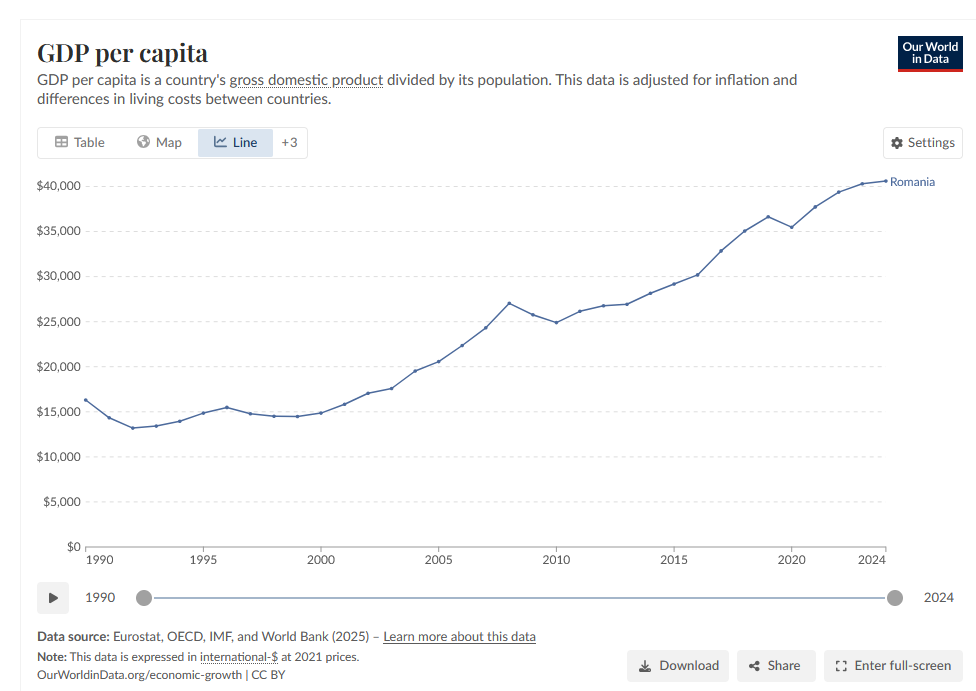
That’s a growth of 250% over 34 years, or a meager 2.7% yearly growth. And that’s without taking into account that the number of people has actually dropped since 1990 and it was growing between 1950 and 1990. Damn, not looking so good for the capitalist European model, is it?
You’re being dishonest by cherrypicking year 2000, the 1990s in Romania were horrifying due to the debt given by the IMF (western-aligned organization) in order to crush the welfare state in Romania and adopt austerity policy as I discussed. You cherrypicked the year 2000 because that’s more or less when the super high inflation of the 1990s started to balance, and you’re talking in Euros and not in the local currency because exchange rates were astonishingly low due to currency devaluation. Let’s see how well Romania fared in the 1990s during capitalism!
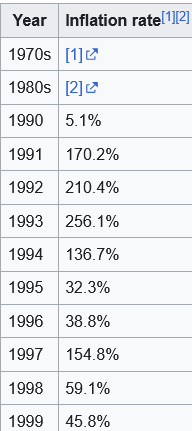
From 5% yearly inflation during communism to 250% during capitalism. This is EXACTLY what I mean by the European betrayal: Romanians were promised wealth comparable to western Europe, and instead were met with deindustrialization, destruction of welfare, horrifying levels of inflation, and sudden unimaginable unemployment after half a century without unemployment. It’s literally western-funded loans in the 1980s that started to crash the Romanian economy. You cherrypick two convenient dates, ignore the millions of lives lost and emigrated, and say “look, more Euro is better” ignoring that people literally have to flee the country due to the terrible economy. As of today, Bulgaria and Romania are the two EU countries with highest poverty rates, 30% and 28% respectively. You could also directly ask the population, most of whom support communism and Ceaucescu and claim that life was better during socialism. They also poll saying it was a safer country and less corrupt. Tell me again how Europe hasn’t betrayed those countries.
If you also wanna discuss Spain that’s wonderful, I happen to be a Spaniard. I have seen nothing in my life but economic downturn, stagnation, reductions of real wages, and housing becoming increasingly unaffordable. Let’s go to the Spanish National Institute of Statistics to check the consumption per person:
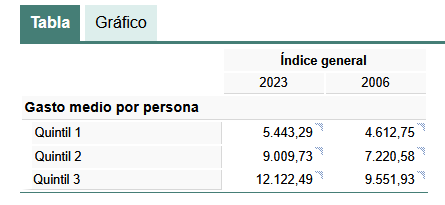
So, the 20% poorest in Spain used to spend 4612€ per year in 2006. By 2023 it went up to 5443€… but inflation in this period was 38.7%, meaning that to maintain equal consumption capability they should be spending 6396€. Real expenditure, hence, has dropped by 15% for the poorest 20%.
Running the numbers for the following 20% poorest, who spent 7220€ in 2006, they should spend 10014€ to maintain consumer power, but it’s only risen to 9009€, so a 10% reduction in purchase power.
For the following 20%, meaning the 20% of people with the earnings closest to the mean (10% below and 10% above) it’s gone from 9551 to 12122, it should have gone to 13247€ per year, so an 8% reduction in purchase power for the average Spaniard over the past 20 years.
Now explain me how relevant your “average salary increases in Spain” are if the mean Spaniard has suffered not just stagnation. but a progressive worsening of purchase power. Tell me again how fucking wonderful this European model is.
Romania and Bulgaria are rich? I’m Spanish, a country by no means rich, and we have tons of Romanian immigrants because the working conditions there are extremely hard, and they suffered similar issues:
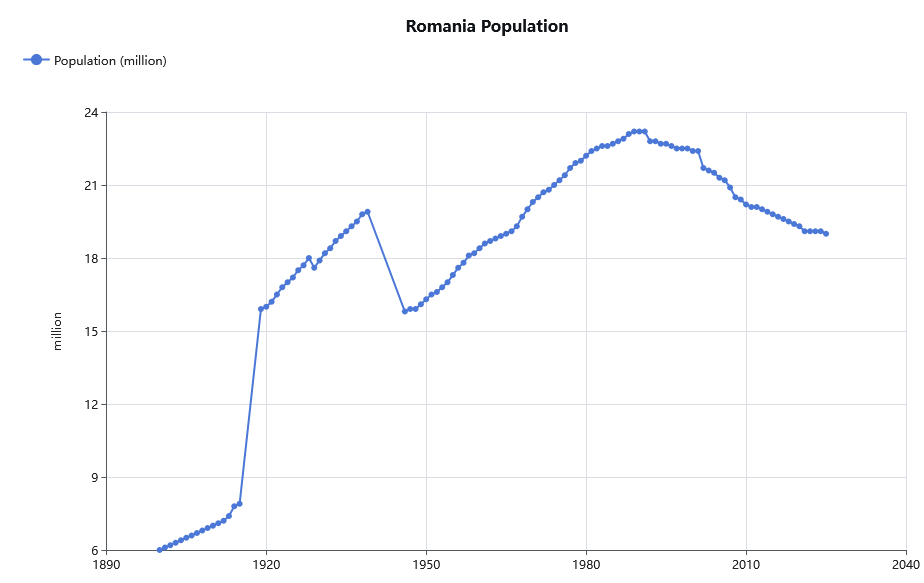
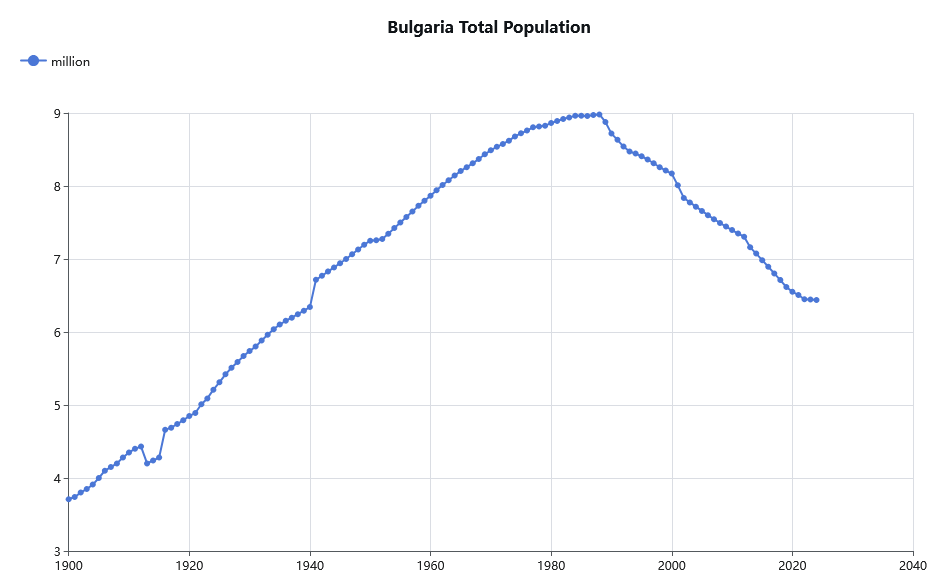
This is especially true for Bulgaria, they lost like a freaking third of the population since 1990 (from 9mn to 6.4mn in 2024). By what metric are they rich? GDP per capita? How about access to housing, to healthcare, to quality education, the ability to stay in rural areas with non-decrepit infrastructure…
Regarding Poland, the country may be richer as a whole (again, using GDP per capita as metric), but are the people faring better? Look at the share of national income by the bottom 50% of the people:
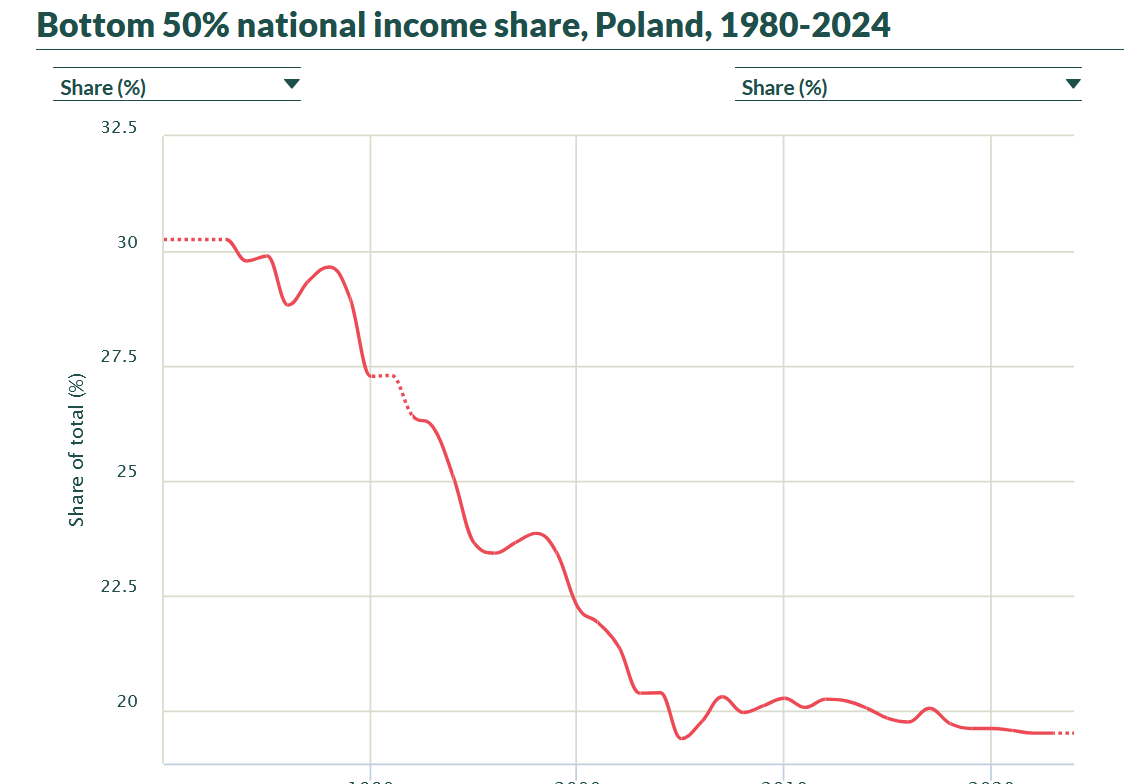

Huh?